Tag: post-training

  • Power by the hour

    It is a truth universally acknowledged that an airline in possession of an airplane must be in want of engines to make it go. Yet, somewhat surprisingly, they don’t really buy engines.

    Rolls-Royce were the notable innovator here in selling not an engine, but instead what they call power by the hour:1 airlines pay a price for the miles actually flown by the engine.

    There are a lot of operating decisions in owning and maintaining an aircraft engine: for example, if you have to take the engine off the wing for repairs it means a lot of downtime for the plane, during which it isn’t making any money. Airlines used to make the call of when to do proactive maintenance vs when to do more extensive refits based on their experience within their fleet. But Rolls-Royce had a view across all their customers, and could do a much better job of predicting maintenance and repair timing, getting the right parts to the right places, and generally keeping the engine in service.

    They converted that operational expertise into a product, which just happens to be delivered via a massive turbofan. This pricing model was appealing to the airlines since it aligned with their incentives, and their risks. Under the old model engine makers got paid for spare parts and shop visits, so failures were a kind of revenue. But once they were paid per flying hour then downtime became their cost too.

    In ML infrastructure, those flying engine miles are generally referred to as goodput. A Google Cloud blog post from a couple of years ago has a good set of definitions:

    Runtime Goodput measures the time spent to make forward progress as a fraction of time when all training resources are available. Maximizing runtime requires careful engineering considerations. […]


    Program Goodput measures the fraction of peak hardware performance that the training job can extract. Program Goodput is also referred to as Model Flop Utilization or effective model flop utilization, i.e., the model training throughput as a fraction of peak throughput of the system. Program Goodput depends on factors such as efficient compute communication overlaps and careful distribution strategies to scale efficiently to the desired number of accelerators.

    To give one concrete example if you checkpoint every N steps then get a failure at step N-1, the prior steps are lost work and don’t contribute to goodput. A surprisingly large number of things can impact it; Llama 3.1 had a section talking about the reliability pain during pre-training:

    During a 54-day snapshot period of pre-training, we experienced a total of 466 job interruptions. Of these, 47 were planned interruptions due to automated maintenance operations such as firmware upgrades or operator initiated operations like configuration or dataset updates.

    Improving goodput is a horrendously complex project spanning hardware, software, cluster scheduling, kernel work, profiling and resource management. It’s often the preserve of dedicated ML infrastructure teams2, but not everyone has such a team available.

    Neoclouds sprang up to provide pods of accelerators, but the actual goodput available varied enormously. The GPU provider gets paid for the GPUs you are renting, regardless of whether they are making useful progress or sitting in a NCCL timeout.

    SemiAnalysis’s ClusterMAX rating gave a (controversial!) view of the varying operational capabilities of the neoclouds, measuring goodput-impacting things like spare GPU capacity, failover and repair times, launch overhead and so on. This let purchasers at least compare reliability, but still fundamentally they were charged for the GPU-hour.

    What’s emerged now is a higher level of the stack, notably Thinking Machines’ Tinker, and Prime Intellect’s Lab products.

    Both teams are full of folks used to extracting top-tier goodput, and much like Rolls-Royce they are both selling that operational expertise and have ability to improve it by working with a wide range of customers. Rather than power-by-the-hour they sell goodput-by-the-step: you pay for meaningful progress, not for idle clusters.

    Given the capabilities of open models, like the (open this month) 2.8T Kimi K3, or Thinky’s own 980B Inkling, there is an opportunity to RL a strong model on a bunch of domain-specific knowledge or tasks only you have access to.

    Bridgewater, the HR experiment with algorithmic hedge-fund attached, published a case study with Thinking Machines from their AIA Labs group, where they attempted to train Qwen on certain financial analysis work:

    Frontier models we tested on struggle with relatively simple financial tasks, and model advances don’t improve performance much. In contrast, we’ve shown that high-quality proprietary datasets labeled by expert investors and used for fine-tuning produce custom models that exceed frontier performance on our tasks.

    This is sometimes referred to as RL-as-a-service, and there is legitimate skepticism of whether that is a good business. But really, this is frontier-scale, reliable training infrastructure as-a-service

    You can see this in the Bridgewater post: a small hedge-fund research team did a multi-iteration RL recipe search at 235B scale, and ended up with GRPO, CISPO loss with asymmetric clipping, interleaved batching and on-policy distillation, all ablated. That kind of experimental capability at scale was largely inaccessible outside perhaps 20 firms a year or two ago. Now, it’s doable with an API call.

    1. Technically this term is much older, dating back to the 1960s with Bristol Siddeley, which is now a subsidiary of Rolls-Royce. But in practical terms this became a commercial airline thing in the late 90s with TotalCare: GE and CFM, the other big engine makers, followed along ↩︎
    2. Disclosure, several of which I have had the pleasure of working in at Meta! ↩︎
  • Who is walking who?

    One good way to annoy a neuroscientist is to compare an LLM to the brain. It’s appealing though! There are similarities! In infancy we take a complex fusion of sensory inputs and learn to make predictions in latent space, while in pre-training a stack of Transformers learn to predict which number SolidGoldMagikarp will say next on Reddit.

    The actual life of an LLM is much less human though. Humans (possibly even SolidGoldMagikarp) do learn and adapt throughout their lives. LLMs go through pre-, mid- and post-training before being frozen, then their corpse is animated for money. In some ways this is more similar to a sea-squirt1: sea-squirt larva are tadpole-ish creatures with a little nervous system that they can use to swim and sense and find a suitable surface to attach to. Once attached, they eat their own brain: all that machinery is broken down and reabsorbed. How good that brain was matters though: if the sea-squirt finds a good home it will be more likely to pass on those good-brain genes to its descendants.

    LLMs evolve this way too, which is a cause of drama in biologist circles. There are some ongoing arguments about whether LLMs are evolving in a safe, domesticated, corgi-like manner, or are at risk of going feral:

    Drawing on biological evolution and decades of digital evolution experiments, we distinguish “breeder” scenarios, in which humans impose fitness criteria and control reproduction, from “ecosystem” scenarios, in which selection arises from open environments and control erodes. In the latter, selfish replication reliably gives rise to cheating, parasitism, deception, and manipulation, even in very simple systems.

    But what does evolution for LLMs look like? An LLM is really a data set, an architecture, and a training regime, and the many choices in each of those are somewhat gene-like. In the earlier days of deep learning, passing them on was a manual process and selection was driven through publication and other researchers reading the paper: if an idea was interesting enough to publish, and convinced a committee of reviewers, it became visible and passed on. Then it got a bit cruder, but also harder to finesse: does the model do the benchmark? Nowadays we have profit and loss: how many people are buying tokens from these models?

    Those tokens themselves propagate ideas, too. If you use that successful model itself as a judge or to generate synthetic data you inherit some of its choices. Academic LLM inheritance is basically Lamarckian: researcher insights get acquired and inherited quickly. But modern LLMs are part of a Darwinian market layer, red in tooth and GPU allocations.

    When the environment gets Darwinian, biology tends to push organisms towards niche construction: shaping that environment itself to better fit the organism.

    Armin Ronacher of the Pi harness wrote about an issue where newer, better models did a surprisingly worse job of using Pi’s edit tool:

    When Opus 4.5 launched, it adapted to other edit tools exceptionally well. In fact, I was pretty convinced that we’re on a good path where the models are more likely to adapt to any sort of tool shape that comes around for as long as the instructions are good.
    Now I’m somewhat worried about the track we’re on here. Alternative tool schemas might not just be unfamiliar. They might be implicitly punished by post-training that optimizes for one particular, forgiving tool ecology. And that ecology is not documented.

    Post-training Claude on a particular shape of edit tool doesn’t just make Claude better on that edit tool, it encourages harness authors to support that shape. It propagates that shape of edit tool. That itself leads to more traces which use that edit tool, which propagate that technique into otherwise unrelated models. Claude is constructing a niche where edit tools bend towards its preferred approach, despite that approach being, as Ronacher complains, undocumented.

    LLMs don’t need to go feral (or become misaligned superintelligent replicators) to shape the world around them to be more amenable to their success, or to pass on those preferences to future models. That’s a good thing? While we still don’t have much of an idea of how to do model interpretability, we do pretty much know how to make an edit-tool API.

    1. Thanks Octonauts! ↩︎
  • We can distill it for you wholesale

    There has been a lot of drama1 about distillation: how (closed) frontier models are being used by other labs to boost their own performance on particularly hard tasks.

    The drama is not fake, exactly. Anthropic, and recently OpenAI, have a notable lead in the agentic-coding domain, and some of that is from having data that other people don’t. Getting it is… not cheap:

    This is why there are huge efforts going on at certain companies2 to develop long form agentic trajectories. But! Not everyone has the money, or the engineers, to do that.

    So, there is an incentive to maybe, allegedly, copy some homework. It’s not clear though how exactly to do that: the frontier labs generally don’t share the chain-of-thought that their models are using while they reason, which means you only have a sparse signal to train your model on.

    One piece of the puzzle is in a paper from February this year, “Privileged Information Distillation for Language Models” by Emiliano Penaloza et al. at ServiceNow, which is probably not where most people are expecting the hot post-training discourse to come from. On-Policy Self-Distillation is spicy right now in post-training circles, and this is one of the earlier papers in the current zeitgeist3.

    The paper’s primary contribution is π-Distill: how do you do distillation when you have Privileged Information?

    “We ground our work in the task of distilling frontier models for complex multi-turn agentic settings. Typically, the industry standard for these tasks involves Supervised Fine-Tuning (SFT) on frontier model outputs followed by Reinforcement Learning (RL). Unfortunately, some model providers restrict important information, most notably the model’s full Chain-of-Thought (CoT) reasoning traces (OpenAI et al., 2024), providing only a summary alongside the action they intend to take. This opacity undermines standard distillation methods, as we can observe what successful agents do but not how they reason about it.”

    The rough idea is to not use the frontier model as a teacher, but to use it as a source of that privileged information:

    • You have one set model weights, run in two modes: a privileged teacher, and an unprivileged student.
    • A frontier model solves a task in its tool-use harness. You may not see its chain-of-thought, but you can observe what it actually does: its action trajectory.
    • That action trajectory is converted into the privileged information: tool names, tool calls with arguments, or a compact hint.
    • The teacher-mode model sees the task/history plus this privileged trace in the prompt. The student-mode model only sees the task/history in its prompt.
    • The teacher rolls out a trajectory and gets an RL reward4.
    • The student is then trained with teacher forcing: calculating loss based on how likely it would be to predict the actual next token the teacher generated.
    • The teacher and student losses are combined and applied to the single shared set of weights.

    As the authors continue, it doesn’t even require a closed model to distill from. Other kinds of privileged information can help you do the same trick, which is the second variant of their recipe. If you don’t have an outside source but you do know some bonus details (e.g. hints on how to solve it, or critiques on prior attempts) you can pass them into the teacher:

    • Let the student roll out, without the privileged information.
    • Then ask the informed teacher how compatible the student’s tokens were with what the teacher would have done.

    The discussion about distillation has focused on the idea of stealing some kind of secret knowledge. What this method really shows though is that distillation is about turning information that the model will not have at test time into behaviors it will have.

    Like any good teacher, having a sense of how to get to the answer is going to make it easier to help your student. The “on-policy” part here is that the student and teacher are the same, the difference is the teacher is reading ahead in the study guide.

    As tasks get longer, tool use gets richer, and agent traces get more valuable. The question is probably less “can labs hide the model’s reasoning?” and more “what clues can you train on?”

    1. And/or marketing. ↩︎
    2. Notably including the one I work at! ↩︎
    3. Other good reads are the Thinky Blog and “Self-Distilled Reasoner”, which was released few days before this, and is where the name comes from! ↩︎
    4. With a KL penalty that keeps it from drifting too far from the student. ↩︎
  • What is In-Distribution

    What is In-Distribution

    One of the persistent questions in model development is whether reasoning actually involves… reasoning. As in: are we seeing actual logical conclusions, or just better recall of knowledge and patterns from the training set? LLMs are trained on, roughly, the web, which makes answering that question tricky: almost everything shows up in some form. A model that appears to “reason” through a physics problem could just be pattern-matching an irritated Reddit reply it saw during training.

    On the Interplay of Pre-Training, Mid-Training, and RL on Reasoning Language Models takes a look at this question methodically.

    To this end, we build a fully controlled framework that isolates the contributions of each training stage. Our design is based on three principles: (i) fully controllable synthetic reasoning tasks with explicit atomic operations and DAG-defined dependency structure; (ii) observable, parseable reasoning processes enabling process-level evaluation and reducing reward or evaluation hacking; and (iii) systematic manipulation of pre-/mid-/post-training distributions to attribute causal effects to each stage.

    The authors break the problem of reasoning and training data down along two dimensions.

    1) Breadth-wise: can the model generalize from one type of problem to another (structurally similar) one in a different domain?
    2) Depth-wise: can the model reason correctly for longer, and hence solve harder problems?

    Rather than train on the internet, they build synthetic Math-puzzle reasoning tasks using a dependency-graph framework inspired by GSM-Infinite. By varying the depth of the reasoning chains required, and by generating structurally equivalent tasks across different domains, they try to tease apart those two aspects and investigate them separately.

    For the breadth side the model needs to generalize, to transfer learning across domains. The paper finds that the target domain has to be “in-distribution: the model has to have some examples in the pretraining set. They test this by using pass@128: if you give the pre-trained model 128 attempts, does it get the answer right even once? If so, you can use reinforcement learning or SFT to help the model get reliably better.

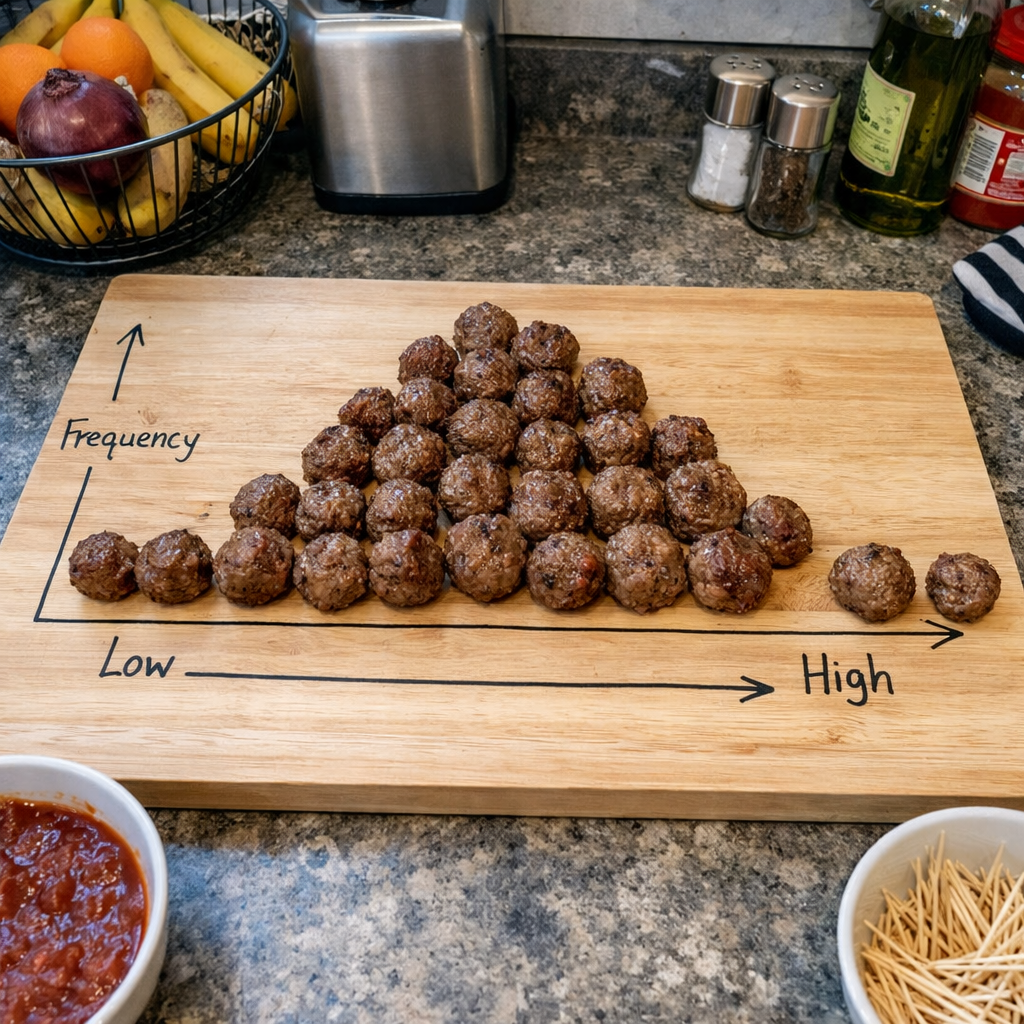
    It’s a bit like having studied Spanish at some point and forgotten albóndigas, the word for meatballs. If, for dietary preference reasons, you came to use that word regularly it would likely lodge itself in your brain more easily and you’d go from a lowish chance of getting it right to a much higher one.

    The paper is saying you must have this baseline in their to amplify with RL. Daniel Han of Unsloth describes this by saying with RL “luck is all you need”. If the model never gets the answer right, there is nothing much to reinforce (and you are stuck with paella).

    Depth on the other hand does seem to something we can kinda make up in post-training. Even if a model has only been pre-trained on problems up to a certain complexity, post-training on harder problems consistently enables it to solve them. The model is able to compose more complex patterns based on the simpler ones in its training set1. To continued our tortured analogy, this is more like being reminded of several Spanish words and, over time, learning to stick them together into actual sentences.

    Practically this means your pre-training data is a bet on what the model will ever be able to reason about, and post-training refines how well and how hard it can think within those domains.

    That approach also gives a useful tool for identifying whether something is in-distribution. If you want to know whether a model can learn a new capability through post-training, check pass@128 first. If it never gets the answer right in 128 attempts, you probably have a pre-training gap, not an RL problem.

    1. The paper also spends a while justifying curriculum training, giving the model problems just on the edge of its capabilities before introducing harder ones. Recent work from the FAIR Paris folks and others show you can somewhat automate this by generating problems from the same model you are training! ↩︎
  • Let’s all switch to FP16?

    Serious scientists use FP64 – 64 bit floating point numbers – for high precision simulations, but in the world of machine learning we got by for the longest time with FP32. The perennial quest for increased FLOPS, particularly when memory bound, made even that seem too expensive though.

    FP16 offered a reduced numeric range, but at half the size. Training with it in practice meant embracing autoscaling1 which ensured the values stayed within the range FP16 could represent. Then, Google developed BF16: it moved some of the bits to the exponent from the mantissa, so offered the same numeric range as FP32, but with reduced precision.

    Since TPUv3 back in 2018 and Ampere in 2020 it’s been finding its way into hardware and has become the go-to format for training for many models. Life was good, and training in FP16 was mainly discussed as a memory of hard winters past.

    Last week [2510.26788] Defeating the Training-Inference Mismatch via FP16 dropped and threw ML Twitter into a tither by making the argument everyone was doing Reinforcement Learning wrong and the solution… was FP16.

    “In this work, we take a step back from the complex algorithmic fixes and investigate the root cause of the numerical mismatch: floating-point precision. We identify that the modern standard for mixed-precision training, BFloat16 (BF16), is the primary culprit. While BF16 has a wide dynamic range which is excellent for stable pre-training, its low precision makes it highly susceptible to rounding errors that accumulate and eventually cause the training and inference policies to diverge.”

    The process for RL generally looks like:

    • Get a problem in a prompt
    • Do inference on the model to generate complete responses (a rollout)
    • Get a reward score for the response(s)
    • Run a training loop on the model to update weights based on the reward

    If you want to be on-policy (which generally trains better) you need the “model” in steps 2 and 4 to be identical, but the actual code running around the model in the two steps is different: for example, you don’t use a KV cache in training and you don’t store gradients in inference. But you do want to keep the weights and numerics of the model the same, else your on-policy training becomes a little bit off-policy.

    The last year of LLM research has been scaling this up, which requires managing a training and inference flow efficiently. This ongoing pressure to optimize the two paths independently leads to a risk of divergence. The paper finds that absolutely happens, and the divergence collapses the effectiveness of the learning. Unless, that is, you use FP16:

    This is precisely why switching to FP16 provides a fundamental solution. With its 10 mantissa bits, FP16 offers 8 times more precision (210 values vs. 27 values) than BF16. This higher fidelity means that the outputs of the training and inference engines are much more likely to be numerically identical. The increased precision creates a buffer that absorbs the minor implementation differences between the two engines, preventing rounding errors from accumulating and causing a policy divergence”

    The paper does an excellent job of breaking down the many reasons why this happens, but it pretty clear that FP16 is a patch: if you can’t get your numerics perfectly matched, then having more precision gives you more wiggle room.

    About a month before this the ByteDance folks posted a fantastic deep dive into RL collapse from discrepancies between training and inference: When Speed Kills Stability: Demystifying RL Collapse from the Training-Inference Mismatch.

    They identify a range of concerns, including straight up bugs:

    “According to this GitHub issue, we set disable_cascade_attn=True when initializing the vLLM engine and found that it significantly helps reduce the training-inference mismatch in experiments conducted on A100 GPUs.

    Many of the experiments in the FP16 vs BF16 paper were run on A100s2 , so some backlash emerged suggesting that perhaps this whole thing is just a kernel error. But as ByteDance showed, there really is a lot going on that can make things worse.

    Another example is Horace He’s recent work at Thinking Macines around a related problem: Defeating Nondeterminism in LLM Inference – Thinking Machines Lab

    “As mentioned above, one common explanation for why kernels add numbers in different orders is the “concurrency + floating point” hypothesis. The hypothesis states that if the order in which concurrent threads finish is nondeterministic and the accumulation order depends on the order in which concurrent threads finish (such as with an atomic add), our accumulation order will be nondeterministic as well.”

    Horace calls out variance in batching as the primary cause of non-determinism, and hence another quite plausible cause of inference/training mismatch

    “In other words, the primary reason nearly all LLM inference endpoints are nondeterministic is that the load (and thus batch-size) nondeterministically varies! This nondeterminism is not unique to GPUs — LLM inference endpoints served from CPUs or TPUs will also have this source of nondeterminism.”

    The meta-point is that despite being a field fundamentally based in mathematical precision we have been sloppy with numerics, pretty much everywhere.

    Ed Yang’s session in the PyTorch Conference keynote3 a couple of weeks back called this problem out from the perspective of scaling up ML infrastructure. He presented a number of solutions to try and address it, which often comes down to giving folks control over precisely how the numerics work in different parts of their model.

    While the focus here was on RL and FP16, the reality is we deal with this for training->inference in much simpler cases, as well as when moving models between different hardware. Even within generations this can be hard: one of the fun infra problems when the H100 came out was everyone discovering that the FP8 tensor cores in the Hopper used a 22-bit accumulator for intermediate calculations, which wasn’t really documented!

    The balance between speed and accuracy is often effectively made empirically: if something is faster, and works, then at some level it’s right! Reinforcement Learning mixes together different evolutionary chains of optimizations, so maybe those serious scientists with their FP64 were onto something. Not because they absolutely needed the precision, but because they needed to know they had the precision.

    We’re probably not going to switch industry wide back to FP164, but getting a better numerical grounding into the tools we use is going to make everyone’s lives easier, eventually!

    1. torch.cuda.amp and friends ↩︎
    2. Though they did verify on Hopper some as well, which some people seemed to miss ↩︎
    3. Check out the recording: Keynote: PyTorch Technical Deep Dive – Alban Desmaison, Peng Wu, Mark Saroufim & Edward Yang, Meta ↩︎
    4. Especially since most labs are doing so much with FP8 or less these days, and it would probably annoy a bunch of chip designers ↩︎
  • A Primer on Post-Training

    A Primer on LLM Post-Training – PyTorch

    Very excited to see this publicly available. David moved to the PyTorch team at the start of the year, having worked on Llama, and wrote up this excellent guide for post-training internally. This is a cleaned up version of the same doc, and provides a fantastic introduction to the world of post-training for modern LLMs.

    It also includes one of my favorite perverse incentive examples:

    Note: this happens with humans too! We just call these Perverse Incentives, but they are literally the same thing. The British government, concerned about the number of venomous cobras in Delhi, offered a bounty for every dead cobra. Initially, this was a successful strategy; large numbers of snakes were killed for the reward. Eventually, however, people began to breed cobras for income.

    The real kicker in that one came when the government realized what was happening and canceled the bounty. The folks who had been breeding cobras didn’t want to look after them any more, so just released them, leading to a lot more cobras than there had been before!

  • Extending Arcee’s FM context length

    Extending AFM-4.5B to 64k Context Length

    Via Nathan Lambert, an extremely fun write up of the journey to an 64k context length for Arcee’s 4.5B foundation model. There are a lot of good takeaways, but this one particularly resonated with me:

    Experimentation is Key: As in everything I write, I am unable to stress enough the importance of trying dumb things. If you try enough dumb things, eventually one of them will turn into a smart thing. Embrace the chaos.

  • Rubrics

    Rubrics

    Pre-training is about making AI correct, post-training is about making AI helpful1. That helpfulness is (primarily) shaped by reinforcement learning. RL for LLMs really took off with RLHF (RL from Human Feedback), which trained based on the score from a reward model.

    The reward model was designed to score responses based on how well they met certain preferences, and the preferences were inferred from a set of human ratings: the graders were told what to look for in pairs of responses, and the reward model was trained to predict what they would pick. This worked, but was gated on how much signal you could get into the reward model and hence how many humans you had to generate preference data.

    RLAIF (RL from AI Feedback) naturally extended this to using an LLM to make the preference picks rather than humans2. Folks also started to use LLMs in an LLM-as-Judge pattern for evaluation after training: give the model a list of criteria, and ask it to rate how well the responses meet them. 

    The next notable step was RLVR (RL with Verifiable Rewards), which uses ground-truth data to provide rewards scores instead of a model. For example, a math problem might have a defined numeric answer, or a generated proof could be verified by a dedicated theorem prover program. This turned out to work very well for code and math and lead to the O-series of OpenAI models3 and many open reasoners, particularly Deepseek R1. 

    It’s a pretty natural idea to take a verifiable reward pipeline plug in AI scoring directly: rather than a model generate preference pairs and train a separate reward model, give the model criteria and ask it how well the response satisfies them. This means instead of letting a model work out what “good code” looks like from pairs of different (but similar!) solutions to a problem, you have a model working through a checklist, asking things like “Does it have types? Does it have comments? Would your coworkers hate you if you landed this?”

    These checklists are referred to as rubrics and Snorkel have started an interesting looking blog series introducing rubrics, which offers a definition: 

    A rubric is a structured guide that spells out what “good” looks like for each response from an AI system. 

    A rubric consists of:

    • A list of criteria: Does the code compile? Does it have comments?
    • How the model performed on each criterion: “Compiles” could be yes/no. It could also be more nuanced: yes/yes with warnings/no.
    • Scoring rules that turn performance into numbers: Clean = 0. Warnings = 1. No = 2.

    In Nathan Lambert’s recent interview with Ross Taylor, Taylor calls rubrics out as an underappreciated research opportunity, particularly for agentic training:

    Rubrics are underhyped on social media – they were driving force behind projects like DeepResearch – and GenRMs are interesting but perhaps slightly overhyped.

    This caught my eye, as Moonshot leveraged rubric based rewards heavily in Kimi K2, notably using the model they were training as the judge of itself: 

    The framework operates using a Self-Critique Rubric Reward mechanism, where the model evaluates its own outputs to generate preference signals. To bootstrap K2 as a competent judge, we curated a mixture of open-source and in-house preference datasets and initialize its critic capability in the SFT stage.

    One of the core values of rubrics is that they work for both LLMs and humans. You can iterate on rubrics with people, scale them with LLMs, and spot-check LLM results with human raters to ensure reliability. 

    The paper [2507.17746] Rubrics as Rewards: Reinforcement Learning Beyond Verifiable Domains formalizes them as a full peer to Verifiable Rewards. The paper sets up rubrics so each criteria is a simple pass/fail and each has a predefined importance weight. They normalize everything so the system can’t get gamed by just adding more criteria4, and then plug in the resulting score in to the RL loop5.

    Of course, you actually have to write the rubrics, which leads to a specificity versus generality tradeoff: take more time to write more rubrics or rely on fewer, more general ones. The RaR paper makes it clear that more is better:

    predefined generic rubrics substantially underperform compared to prompt-specific ones, underscoring the importance of contextualization. Rubrics that include a broader range of criteria—both positive and negative—consistently outperform those limited to essential checks, suggesting that richer evaluation signals lead to better learning.

    As you might have guessed, the solution was more LLM: use a model to generate prompt-specific rubrics:  

    For each domain, the prompt (included in Appendix H) instructs the LLM to generate 7–20 rubric items based on the complexity of the input question. Each item is assigned a categorical weight (e.g., Essential Criteria, Important Criteria) to determine its importance to a correct answer. The rubrics are designed to be fully self-contained which means that non-expert readers should be able to evaluate response quality using only the rubric. 

    This particularly benefited from having a reference answer attached to the prompt. The models do a much better job of coming up with a good rubric if provided with a (human generated) “good” answer to judge against rather than just the question/prompt. This really opens the door to 1:1 rubrics: given questions and reference answers, you can generate a scoring checklist for each one and mix it with verifiable rewards during post-training. 

    The field continues to be turtles all the way down: using LLMs to write rubrics to have LLM judges evaluate LLM training outputs. At some point, someone’s going to suggest we use rubrics to evaluate how good our rubrics are, and honestly, I’m surprised that paper doesn’t already exist6.

    1. Correct in predicting the next token, and helpful, honest and harmless, specifically. ↩︎
    2. With humans still looped in to validate that the ratings were reasonable. The human graders went from generating ratings to rating the raters. ↩︎
    3. This is the part where everyone pretends they know exactly how O1 works, but actually we’re all just pattern-matching from breadcrumbs ↩︎
    4. Else we’d risk giving more focus to problems with more rubrics, and end up with something unthinkable like a coding model that liberally sprinkles emojis everywhere ↩︎
    5. In practice, they also tried a single LLM judge that took in all criteria and weights and generated a scalar reward, which seemed to work fine. ↩︎
    6. It probably does, I’m just scared to look ↩︎
  • The Tools Are Made Up

    The Tools Are Made Up

    It has been hard to keep up with the flurry of strong agentic open-source models coming out of Chinese labs recently, including Moonshot’s Kimi K2, Z.ai’s GLM 4.5, and Qwen3-Coder1.

    Each of them have the mix of clever pre-training recipes and verifiable-rewards post-training. Notably, Kimi and GLM both use the Muon optimizer, which seems to be gaining ground among the OSS labs at least. GLM’s description of the recipe is as follows:

    Our base model undergoes several training stages. During pre-training, the model is first trained on 15T tokens of a general pre-training corpus, followed by 7T tokens of a code & reasoning corpus. After pre-training, we introduce additional stages to further enhance the model’s performance on key downstream domains. Unlike the earlier pre-training stage on large-scale universal documents, these stages leverage medium-sized domain-specific datasets, including instruction data.

    The additional stages, which they refer to as mid-training, extend the context window and help grow capabilities in specific domains. They then move to post-training, with SFT over reasoning and agentic traces followed by RL with Verified Rewards2.

    The Kimi-K2 technical report goes into more details about how to actually train for tool use. Unlike the others, Kimi is not a reasoning model so doesn’t use much in the way of extended thinking. The fact that wasn’t required to get to strong levels of tool use/agentic capability feels pretty notable to me — most of the recent3 agentic models have been built on a reasoning foundation.

    What I really found interesting from the Kimi report was the level of synthetic data that the team used. This starts in pretraining: to extend high quality data sources they rewrite it with another LLM, giving the same facts with new phrasing, instead of looping over the same “good” data for multiple epochs.

    Their approach to tool training takes this kind of idea ever further:

    We construct a comprehensive tool repository through two complementary approaches. First, we directly fetch over 3,000 real MCP (Model Context Protocol) tools from GitHub repositories, leveraging existing high-quality tool specifications. Second, we systematically evolve 82 synthetic tools through a hierarchical domain generation process. We begin with key categories (e.g., financial trading, software applications, robot control), then evolve multiple specific application domains within each category. Specialized tools are then synthesized for each domain, with clear interfaces, descriptions, and operational semantics. This evolution process produces over 20,000 synthetic tools.

    They analyze a set of real tools, generate some novel (but derivative) ones, then domain-specialize them for a lot of use cases.

    Once they have this tool zoo, the actual training loop involves:

    1. Randomly sample a subset of tools and give it to a new agent with a fresh system prompt. Generate tool-appropriate tasks with explicit success rubrics.
    2. Run an LLM-driven user simulator to drive the agent, while running the tools in sandbox that keeps state.
    3. Filter trajectories using another LLM as judge to keep only successful ones for SFT

    They’re using models at every stage to generate data and evaluate options. When it comes to the actual RL training, they are baselining in verifiable rewards wherever possible for the RL stages: They, and the Qwen folks, talk about their simulator set up for code4: thousands of sandbox environments.

    For software engineering tasks, we collect a vast amount of pull requests and issues from GitHub to build software
    development environment that consists of user prompts/issues and executable unit tests. This environment was built on a robust sandbox infrastructure, powered by Kubernetes for scalability and security. It supports over 10,000 concurrent sandbox instances with stable performance, making it ideal for both competitive coding and software engineering tasks

    The combination of very sophisticated synthetic data and operationally intense sandboxes seem like table stakes for the current agentic game, and one which a lot of labs have figured out. Feels very promising for a growth in capabilities of these models over time, particularly as we work out how best to distill them down to smaller sizes for inference.

    1. Which seems a very solid model, but they haven’t released a lot of extra details about how they got there. One interesting component of the release though was that they forked Gemini CLI to make a qwen-code tool that works with any OpenAI compatible API, and I had some success locally plugging it into the smaller Qwen3 (non-coder) releases in case you were looking for some offline agentic capabilities! ↩︎
    2. Then GLM is distilled between the RL and base version of the model, which apparently helps generalize. This seems like a fun and relatively simple way of smoothing out the learning. ↩︎
    3. Though Claude 3.5 wasn’t, and that is really the trend-setter here I guess! ↩︎
    4. And other tasks that allow fully verifiable rewards. They use other models to score softer domains like creative writing. ↩︎

  • RL in the second half

    The Second Half – Shunyu Yao – 姚顺雨

    Extremely interesting post by Shunyu Yao of ReAct and Tree of Thought fame about where we got to with AI and where we are going. Read it for the spot-on description of the weirdnes of reasoning as an RL concept, but my main takeaway was the refinement to the idea that the most important thing is having models that “do the benchmarks”

     To recap the game of the first half:

    • We develop novel training methods or models that hillclimb benchmarks.
    • We create harder benchmarks and continue the loop.

    This game is being ruined because:

    Even if we create harder benchmarks, pretty soon (and increasingly soon) they get solved by the recipe. […]

    The recipe has essentially standardized and industried benchmark hillclimbing without requiring much more new ideas. As the recipe scales and generalizes well, your novel method for a particular task might improve it by 5%, while the next o-series model improve it by 30% without explicitly targeting it.

    The post makes the point that the gap is benchmarks that more closely map to real-world problems.

    when the intelligence is low, improving intelligence generally improves utility. But now, the general recipe is guaranteed to work under these assumptions. So the way to play the new game of the second half is

    • We develop novel evaluation setups or tasks for real-world utility.
    • We solve them with the recipe or augment the recipe with novel components. Continue the loop.

    Shunyu works on computer use at OpenAI, so this is well within his wheelhouse, and I think it’s a compelling claim. Many folks1 have talked about the capability overhang LLMs: there is a large baseline ability to do things in the models, but eliciting that ability can be challenging. I tend to think of that similarly to how that are many words which we can comfortably understand, but are very unlikely to use ourselves in conversation2. RL is our most powerful tool for eliciting capabilities, but it’s a somewhat blunt instrument. Having the right evals, eval environment and tasks helps train the agent to interact in a way which generalizes.

    I wonder if, as we progress through this second phase, that we will find signs of a similar “universal geometry” as has been suggested for pretraining in this elicitation: perhaps there is eventually a universal navigation3 towards where to generate in that space for different tasks. Maybe that’s what we’ll call AGI!

    1. Jack Clark particularly ↩︎
    2. Receptive vocabulary vs. productive vocabulary. ↩︎
    3. A universal geometry of a vector field? ↩︎
  • Reinforcement Learning Continues To Be The Frontier

    Back in 2021, OpenAI nixed its robotics team, leading to comments on Hacker News like “Reinforcement learning itself is a dead-end on a road to AI”. Now, in 2025 we are surrounded by RL post-trained reasoning models and Mary Meeker is using the word “unprecedented” a lot. This kind of skepticism/hype overlap is very common right now, as Helen Toner breaks down in her excellent recent post/talk on unresolved questions in AI:

    Last year, we had coverage from the Wall Street Journal—really good reporting—about real challenges inside OpenAI with scaling up their pre-trained models and how difficult that was and how they weren’t happy with the results, and then on the literal same day we had the release of o3, the next generation of their reasoning model, and François Chollet—who’s famously skeptical—saying that it was a significant breakthrough on his ARC-AGI benchmark. So these very contradictory takes, both of which had some truth to them.

    The framing used in that post is really useful: it’s less about “are we making progress?” and more “are we on the right branch of the tech tree?”

    A lot of people thought RL was the wrong branch: after notable successes from DeepMind and OpenAI, RL had become a bit of a backwater, with some resurgence (in a limited form) from Reinforcement Learning with Human Feedback (RLHF) for preference tuning LLMs.

    The reason people keep coming back to reinforcement learning is the ability to discover new things. Supervised learning is somewhat inherently bound by the dataset. A reinforcement process can continue to explore and find new strategies, like the famous examples of AlphaGo choosing moves humans wouldn’t have. Tim Lee has an excellent non-technical introduction to the evolution of RL that mentions this: Reinforcement Learning Explained

    In short, imitation learning can rapidly teach a model to mimic the behaviors in its training data, but the model will easily get confused in unfamiliar environments. A model trained with reinforcement learning has a better chance of learning general principles that will be relevant in new and unfamiliar situations

    In this direction, a recent paper, [2507.00432] Does Math Reasoning Improve General LLM Capabilities? Understanding Transferability of LLM Reasoning, suggests1 that reasoning generalizes better from RL-driven learning than supervised fine-tuning.

    RL-tuned models achieve significant gains on math reasoning while preserving positive transfer to other reasoning tasks and non-reasoning tasks, whereas SFT often incurs negative transfer on non-reasoning benchmarks. Second, PCA analysis of latent space confirms that RL induces minimal drift from backbone representations thus maintaining feature stability, while SFT produces larger latent shifts, especially in non-reasoning domains. Third, token-distribution analysis shows that RL selectively adjusts only a handful of task-relevant tokens, whereas SFT perturbs many irrelevant tokens, indicating RL’s more targeted optimization.

    RLHF is implemented by first training a reward model based on human preference feedback: you give people two versions of an answer, they tell you which one they prefer, you then train a model to predict those ratings. That reward model becomes the scoring function during post-training.

    Designing good reward functions has been somewhat of a dark art in RL. The agent optimizes what you ask for, which is not always what you really want2. This “reward hacking” phenomenon makes RL agents somewhat brittle, prone to exploiting loopholes in environments in ways no one anticipated.

    The recent reasoning models did so well because their rewards were verifiable: reward scores that are based on some ground truth validation and are often just yes/no: does code compile, does it pass a unit test, can a math proof be verified by a formal logic reasoner, or simply is the answer correct or not. Nathan Lambert did a breakdown on where RL goes next:

    The optimistic case for scaling current reinforcement learning with verifiable rewards (RLVR) techniques to next-generation language models, and maybe AGI or ASI depending on your religion, rests entirely on RL being able to learn on ever harder tasks. Where current methods are generating 10K-100K tokens per answer for math or code problems during training, the sort of problems people discuss applying next generation RL training to would be 1M-100M tokens per answer.

    Lambert makes the point that even the very long-range tasks we have now (coding agents, deep research) are based around learning to be better at tasks individually, then stringing those together:

    How to read this training method, which is likely similar for agents like Claude Code or Codex, is that current RL methods are helping the models get more robust at individual tasks that make up a longer trajectory rather than being trained on the end result of the trajectory itself. The final long-horizon behavior is put together with prompting and letting the model run longer, not sparse credit assignment. In the case of Deep Research the final measure of performance would actually look far closer to human preferences than verifiable rewards, and a large portion of that applies for Claude Code as well, where multiple solutions could solve a problem and it falls to human taste to say which is the best.

    This problem of having to learn to act over a long time-horizon is a recurring one in RL. The best algorithms we have for reinforcement learning are online: the model learns “live” while interacting with the environment. But sometimes it’s a lot easier to collect data than it is to run an experiment: for example, it’s much safer to get a large amount of sensor input from driving cars around than it is to have a model driving a real car around and making mistakes. This is off-policy or offline RL, and it offers the promise of learning from much larger data sets.

    Seohong Park recently wrote a great post breaking down how offline RL fails to scale up: Q-Learning Is Not Yet Scalable3. In the experiment there the team at Berkeley generate 1000x more data to try and scale offline RL, and still see the process breaking down:

    Q-learning struggles to scale because the prediction targets are biased, and these biases accumulate over the horizon. The presence of bias accumulation is a fundamental limitation that is unique to Q-learning (TD learning). For example, there are no biases in prediction targets in other scalable objectives (e.g., next-token prediction, denoising diffusion, contrastive learning, etc.) or at least these biases do not accumulate over the horizon (e.g., BYOL, DINO, etc.).

    Noted LLM-branch skeptic (and technically a very distant colleague) Yann LeCun has spoken a lot about a version of this kind of planning and world modelling problem, which he sees as inherent to the autoregressive nature of LLMs: the accumulation of errors over long time horizons.

    One of his architectural bets is JEPA, and the recently released V-JEPA 2 paper is beginning to show how this could work. V-JEPA 2 is a self-supervised video world model trained on a million hours of YouTube video. The model learns in a semi-supervised fashion by masking out parts of video frames and predicting them, in latent (embedding) space rather than pixel space. After the pre-training, they freeze the encoder, generate tokens with it for a video and prepend those to a query for a pretrained LLM4 .They fine-tune that LLM on video question answering data, and were able to get state of the art question answering with that set up, despite the JEPA part of it being totally task agnostic.

    Going a step further, they took the encoder and hooked it up to a small robot control model5. They trained it on some robot operator data for pick-and-place tasks. It learned to do a remarkably good job, without any reinforcement learning at all!

    This is interesting because robotics has traditionally been an area where we have seen a lot of exploration (with success and disappointment!) with long-range RL. Andrew Stokols’ excellent post on ChinaTalk makes a good case that while the west has focused on AI in a brain-in-a-jar type way, there has been a concerted push in Beijing for Embodied AI (with Chinese Characteristics). China has a very strong base in manufacturing. Robotics, drones, autonomous vehicles are all being developed and deployed in the country.

    One of the fundamental challenges robotics systems have to address is much more constrained latency bounds: the world operates in real time, and running a big model may result in a smart robot that simply cannot respond quickly enough to be useful. The space has trended towards hierarchical models, which chunk actions into higher level concepts that a controller model puts out (like “pick up at x”) and lower-level models that decode those chunked outputs into a series of motor commands. While sometimes transformers are used autoregressively (take sequences of state, action and predict next action), many now use diffusion-based techniques where they will generate a whole trajectory at once. Physical Intelligence recently put out a paper on Real Time Chunking where they show you can start with generating a chunk, then continue the denoising process a-la inpainting or fill-in-the-middle to generate the steps between the start and goal, allowing more real time responses.

    China putting a lot of eggs in the embodied AI basket is indirectly also betting that methods to make those systems learn and adapt will mature. Some of those same techniques will invariably apply to the (disembodied) agents that are currently the focus on big labs in the west.

    1. One of the ways they corroborate this finding is by seeing there is less KL divergence in the RL trained model than the SFT model, but that’s usually a training objective on RL, and I’d imagine you could apply KL regularization to SFT as well if you wanted. ↩︎
    2. A classic example from OpenAI: A reinforcement learning agent in a boat race game was given points for hitting targets, so it happily learned to drive in circles hitting the same targets forever, instead of actually finishing the race. Faulty reward functions in the wild | OpenAI ↩︎
    3. Q-Learning is the most common class of algorithms for offline RL. ↩︎
    4. They unsquash it into the hidden dimension size, and depending on how the numbers work out add some pooling. ↩︎
    5. Much like with the LLM, they combine the video embeddings with model-specific tokens, in this case a state tracking input and the current state of the robot arm. ↩︎
  • AbsenceBench

    https://arxiv.org/abs/2506.11440

    Simon Willison has a good summary:

    Long context models have been getting increasingly good at passing “Needle in a Haystack” tests recently, but what about a problem in the opposite direction?

    The answers are surprisingly domain-specific; some models do great on numeric sequences but most are pretty bad at code!

    The authors posit that attention is just a worse mechanism for seeing what’s missing vs what’s there. For me this rhymes with the experience of folks doing agentic coding assistant work: its beneficial to clear the context window more often than you think as the models strongly prefer to use what is already in there.

    This feels like a learned or tuned behavior, a flavor of the model does the eval. Models will probably get better at this problem, as now it’s legible, but is there a tradeoff that has to be made?

    Pretraining is somewhat saturating, but we have oodles of post-training (which includes context extension), the whole meta-RL process of researchers trying different data mixes and algorithm/architecture tweaks, and inference time search options.

    If OpenAI had Anthropic’s data and evals would they have as good an agentic coding model? And vice versa would Opus be as good at deep research as O3? I honestly don’t know: in the end compute will always be finite and we have to allocate it with some end in mind. It feels very plausible there is no globally optimal scaling law for how you prioritize different model capabilities. But the models will probably do this eval.

  • Scaling RL Compute

    https://gr.inc/blog/scaling-rl-compute/?

    Great post by the folks at General Reasoning on the combination of factors that led to O1-type breakthroughs in inference time compute.

    But here is the key point: no-one suddenly discovered that reinforcement learning was useful for reasoning. It was always useful, but getting some of the details right was the difference between a good post-training recipe and a paradigm shift in the way we use language models.

    ML research is prone to these lollapalooza effects where several positive facts coincide to produce a much larger than expected result. You can go look at the launch of ChatGPT for another example: ChatGPT wasn’t a surprise for folks who had spent time with large language models, and had seen attempts like Galactica before. But for many people it was a remarkable, new experience, and the engagement and interaction ChatGPT saw was new to the researcher community. That itself contributed to further breakthroughs and improvements.

  • Scalably Solving Assistant Games

    Scalably Solving Assistance Games | OpenReview

    Assistant games are an RL approach where the assistant and human cooperate on achieving a goal, and receive a reward signal for the joint effort. This paper proposes them as a better mechanism for aligning models in post-training than RLHF.

    Normally, RLHF is focused on single responses, or a single “turn” or interaction:

    Assistance games avoid the aforementioned drawbacks of RLHF by explicitly accounting for both the interactive nature of assistance and uncertainty about the user’s goal. In particular, an assistance game is a two player game in which an assistant and a user take actions in a shared environment. The two agents share a reward function, but crucially the assistant is initially uncertain about it.

    Assistance games remove incentives for deception since the assistant’s performance depends on the true latent reward function, rather than human feedback. They also incentivize the assistant to interact with the user to resolve its uncertainty about the reward function.

    The paper uses building structures in Minecraft as the learning environment and get some very positive results. They mention the possible applications for chatbot alignment as a post-script.

    Practically this requires, given chat history h, predicting:

    • the next assistant message (or tool call)
    • the next human message in response to that
    • how satisfied the human is with the response

    The algorithm does a tree search, trying various different replies and responses and picks the assistant action which showed up the best. They generally sampled ~100 actions in the paper.

    In the Minecraft example, they can see whether a placed or removed block moves the shape towards the human target, so they can give a reward score each step; doing the same thing with conversations might need some clever goal crafting or propagating back from only a final reward signal.

  • Understanding R1-Zero-Like training

    https://arxiv.org/abs/2503.20783

    Further support for elicitation and a very good example of why its worth starting with the evals.

    They started with evals for mathematical reasoning, and then tested base Deepseek, Qwen and Llama models with different templates to see how they did prior to any RL. In doing so they discovered that Qwen did best with no template, and that Deepseek v3 already would create “aha” moments (reasoning self reflection) without any further tuning. Some of the examples are amusing, particuarly the “awkward silence”:

    In Pascal’s Triangle, every row starts
    and ends with 1, …

    This can be calculated as: awkward silence Wait, I’m overthinking. Let’s try again. The number of elements in the first n rows of Pascal’s Triangle…

    The second interesting takeaway for me was that the GRPO implementation (along with most PPO implementations) have a length bias: wrong but long answers are preferred over wrong but short ones. Their corrected, unbiased approach resulted in the same performance, but better token efficiency:

    We also revisit the GRPO’s optimization bias with the Llama base model. The right plot of Fig. 8 compares the model performance and response length trained with GRPO and Dr. GRPO [Ed: the unbiased version]. We can clearly see that GRPO can produce the “double-increase” phenomenon, potentially leading to a misperception that long-CoT can also emerge on Llama models after math pretraining. Unfortunately, the increase of length might be due to the optimization bias